

Google Business Profile
scalekit56 toolsOAuth 2.0MarketingAnalyticsGoogle Business Profile lets businesses manage their presence across Google Search and Maps — business information, locations, performance/insights...
Google Business Profile connector
-
Install the SDK
Section titled “Install the SDK”Terminal window npm install @scalekit-sdk/nodeTerminal window pip install scalekit -
Set your credentials
Section titled “Set your credentials”Add your Scalekit credentials to your
.envfile. Find values in app.scalekit.com > Developers > API Credentials..env SCALEKIT_ENVIRONMENT_URL=<your-environment-url>SCALEKIT_CLIENT_ID=<your-client-id>SCALEKIT_CLIENT_SECRET=<your-client-secret> -
Set up the connector
Section titled “Set up the connector”Register your Google Business Profile credentials with Scalekit so it handles the token lifecycle. You do this once per environment.
Dashboard setup steps
Register your Scalekit environment with the Google Business Profile connector so Scalekit handles the authentication flow and token lifecycle for you. The connection name you create will be used to identify and invoke the connection programmatically. Then complete the configuration in your application as follows:
-
Set up auth redirects
-
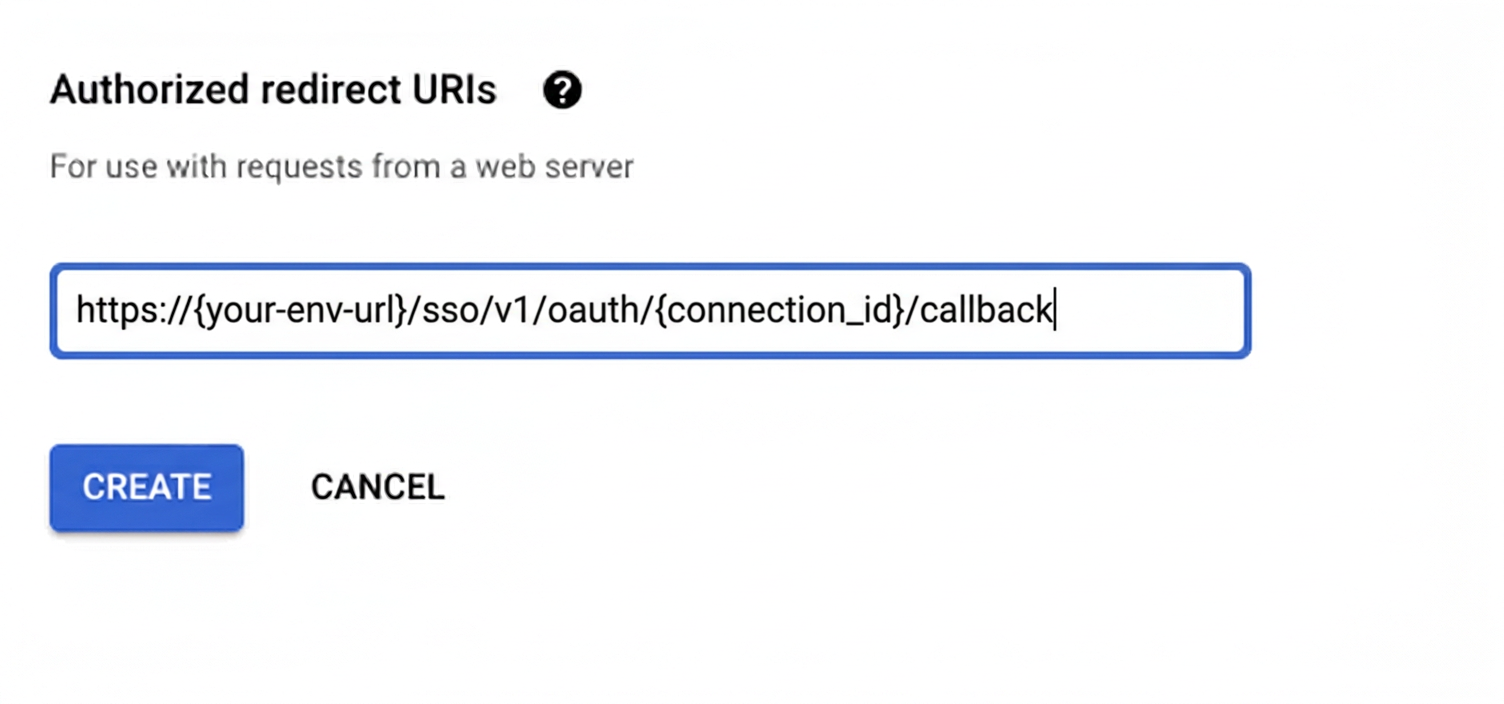
In Scalekit dashboard, go to AgentKit > Connections > Create Connection. Find Google Business Profile and click Create. Click Use your own credentials and copy the redirect URI. It looks like
https://<SCALEKIT_ENVIRONMENT_URL>/sso/v1/oauth/<CONNECTION_ID>/callback. -
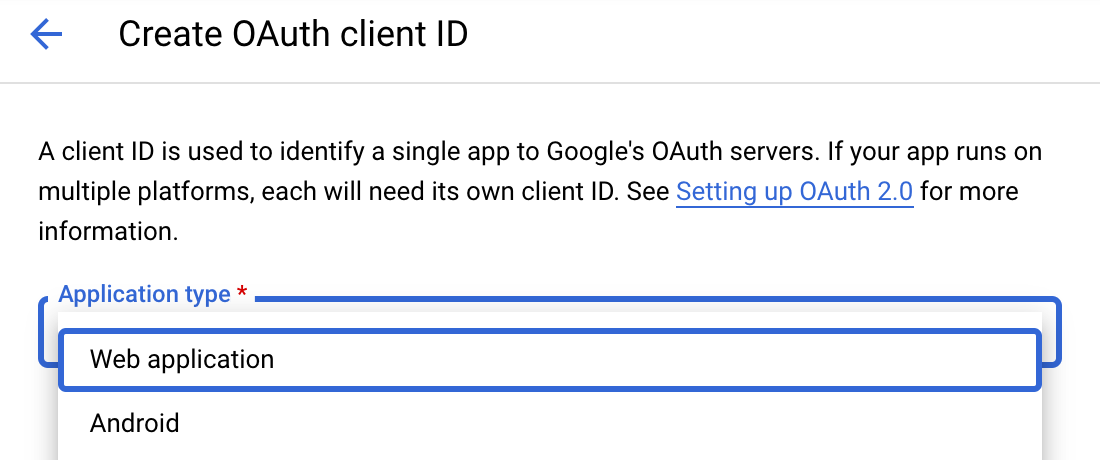
Navigate to Google Cloud Console → APIs & Services → Credentials. Select + Create Credentials, then OAuth client ID. Choose Web application from the Application type menu.
-
Under Authorized redirect URIs, click + Add URI, paste the redirect URI, and click Create.
-
-
Enable the Google Business Profile API
- In Google Cloud Console, go to APIs & Services → Library. Search for “Google Business Profile API” (previously “My Business Business Information API”) and click Enable.
-
Get client credentials
- Google provides your Client ID and Client Secret after you create the OAuth client ID in step 1.
-
Add credentials in Scalekit
-
In Scalekit dashboard, go to AgentKit > Connections and open the connection you created.
-
Copy the Connection name shown on that connection and use that exact value in your code as
connection_nameorconnectionName. It may be something likelocal-seo-agent-googlebusinessprofile, notgooglebusinessprofile. -
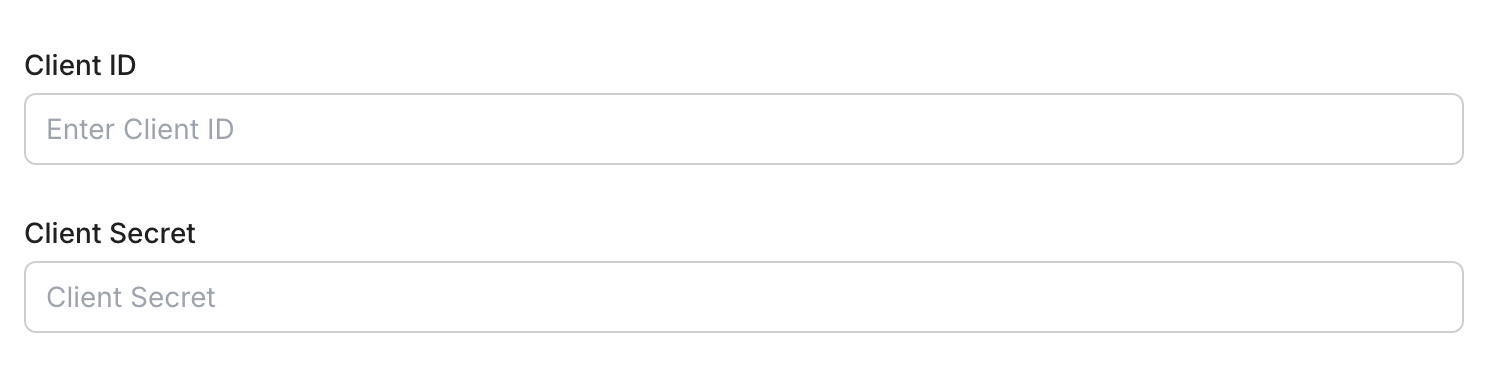
Enter your credentials:
- Client ID (from above)
- Client Secret (from above)
- Permissions (scopes — see Google API Scopes reference)
-
Click Save.
-
-
-
Authorize and make your first call
Section titled “Authorize and make your first call”quickstart.ts import { ScalekitClient } from '@scalekit-sdk/node'import 'dotenv/config'const scalekit = new ScalekitClient(process.env.SCALEKIT_ENV_URL,process.env.SCALEKIT_CLIENT_ID,process.env.SCALEKIT_CLIENT_SECRET,)const actions = scalekit.actionsconst connector = 'googlebusinessprofile'const identifier = 'user_123'// Generate an authorization link for the userconst { link } = await actions.getAuthorizationLink({ connectionName: connector, identifier })console.log('Authorize Google Business Profile:', link)process.stdout.write('Press Enter after authorizing...')await new Promise(r => process.stdin.once('data', r))// Make your first callconst result = await actions.executeTool({connector,identifier,toolName: 'googlebusinessprofile_list_accounts',toolInput: {},})console.log(result)quickstart.py import osfrom scalekit.client import ScalekitClientfrom dotenv import load_dotenvload_dotenv()scalekit_client = ScalekitClient(env_url=os.getenv("SCALEKIT_ENV_URL"),client_id=os.getenv("SCALEKIT_CLIENT_ID"),client_secret=os.getenv("SCALEKIT_CLIENT_SECRET"),)actions = scalekit_client.actionsconnection_name = "googlebusinessprofile"identifier = "user_123"# Generate an authorization link for the userlink_response = actions.get_authorization_link(connection_name=connection_name,identifier=identifier,)print("Authorize Google Business Profile:", link_response.link)input("Press Enter after authorizing...")# Make your first callresult = actions.execute_tool(tool_input={},tool_name="googlebusinessprofile_list_accounts",connection_name=connection_name,identifier=identifier,)print(result)
What you can do
Section titled “What you can do”Connect this agent connector to let your agent:
- Answer upsert — Create or replace the caller’s answer to a customer question on a Google Business Profile location, using the legacy My Business API v4
- Update question, notification settings, account admin — Update the text of an existing customer question on a Google Business Profile location using the legacy My Business API v4
- Search google locations, keywords, chains — Search Google’s existing Maps location data by free-text query (business name and address) before creating or claiming a new location
- Insights report local post — Get view and call-to-action click metrics for up to 100 local posts (What’s New updates) on a single location, in one call, using the legacy My Business API v4
- List questions, location verifications, invitations — List the customer questions posted on a Google Business Profile location using the legacy My Business API v4
- Get voice of merchant state, location google updated, chain — Check whether a Google Business Profile location has ‘Voice of Merchant’ — meaning it is verified, not suspended, and eligible to have its edits reflected on Google Search and Maps
Tool list
Section titled “Tool list”Use the exact tool names from the Tool list below when you call execute_tool. If you’re not sure which name to use, list the tools available for the current user first.
googlebusinessprofile_accept_invitation#Accept a pending invitation to become an administrator (owner or manager) of a Google Business Profile account. Requires the invitation resource name in the form accounts/{account_id}/invitations/{invitation_id}. The request body is empty. Returns an empty response on success; once accepted, the invitation is consumed and the caller becomes an admin of the account.1 param
Accept a pending invitation to become an administrator (owner or manager) of a Google Business Profile account. Requires the invitation resource name in the form accounts/{account_id}/invitations/{invitation_id}. The request body is empty. Returns an empty response on success; once accepted, the invitation is consumed and the caller becomes an admin of the account.
namestringrequiredThe resource name of the invitation to accept, in the form accounts/{account_id}/invitations/{invitation_id}. Example: accounts/106234523651626475467/invitations/109876543210987654321.googlebusinessprofile_categories_batch_get#Fetch the localized display names for one or more specific Google Business Profile category IDs at once, given a language code. Complements List Business Categories, which enumerates all available categories, by resolving a known set of category resource names directly.4 params
Fetch the localized display names for one or more specific Google Business Profile category IDs at once, given a language code. Complements List Business Categories, which enumerates all available categories, by resolving a known set of category resource names directly.
language_codestringrequiredBCP 47 language code to localize the category display names, e.g. en.namesarrayrequiredThe category resource names to look up, e.g. categories/gcid:restaurant. Obtain valid IDs from the List Business Categories tool.region_codestringoptionalISO 3166-1 alpha-2 country code to further localize the results.viewstringoptionalThe level of detail to return for each category. BASIC returns only name; FULL also returns additional details.googlebusinessprofile_complete_verification#Complete a pending Google Business Profile location verification by submitting the PIN code received via the chosen verification method (SMS, phone call, postcard, etc.). Requires the verification resource name and the PIN.2 params
Complete a pending Google Business Profile location verification by submitting the PIN code received via the chosen verification method (SMS, phone call, postcard, etc.). Requires the verification resource name and the PIN.
namestringrequiredThe resource name of the pending verification to complete, in the form locations/{location_id}/verifications/{verification_id}. Obtain this from Verify Location's response or List Verifications.pinstringrequiredThe PIN code received via the verification method (SMS, phone, postcard, etc.).googlebusinessprofile_create_account#Create a new Business Profile account using the Account Management API. Requires an account name and a type (e.g. ORGANIZATION or LOCATION_GROUP). PERSONAL accounts cannot typically be created via this API; use ORGANIZATION, LOCATION_GROUP, or USER_GROUP for programmatic account creation.2 params
Create a new Business Profile account using the Account Management API. Requires an account name and a type (e.g. ORGANIZATION or LOCATION_GROUP). PERSONAL accounts cannot typically be created via this API; use ORGANIZATION, LOCATION_GROUP, or USER_GROUP for programmatic account creation.
accountNamestringrequiredThe name of the account to create. For an ORGANIZATION this is typically the business's legal or brand name. Example: Cascade Coffee Holdings.typestringrequiredThe type of account to create. PERSONAL accounts cannot generally be created via this API.googlebusinessprofile_create_location#Create a new location under a Google Business Profile account. Requires the parent account resource name and a business title. Optionally supply a storefront address, phone numbers, primary/additional categories, and regular business hours. Set validateOnly to true to validate the request without creating the location.13 params
Create a new location under a Google Business Profile account. Requires the parent account resource name and a business title. Optionally supply a storefront address, phone numbers, primary/additional categories, and regular business hours. Set validateOnly to true to validate the request without creating the location.
parentstringrequiredThe account resource name under which to create the location, in the form accounts/{account_id}. Example: accounts/106234523651626475467.titlestringrequiredThe business name (title) for the new location, reflecting the real-world business name as used consistently on the storefront. No taglines or special characters. Example: Cascade Coffee Roasters.language_codestringoptionalThe BCP 47 language code for the location's data (e.g. "en", "fr", "de"). Required by Google — defaults to "en" if not specified.primary_category_namestringoptionalPrimary category resource name for the location, e.g. categories/gcid:restaurant. Maps to categories.primaryCategory.name. Optional but recommended.primary_phonestringoptionalPrimary phone number for the location, in E.164 or local format. Maps to phoneNumbers.primaryPhone. Optional.regular_hours_periodsarrayoptionalRegular business hours as an array of time periods. Each period is an object: {"openDay": "MONDAY", "openTime": "09:00", "closeDay": "MONDAY", "closeTime": "17:00"}. openDay/closeDay must be one of MONDAY, TUESDAY, WEDNESDAY, THURSDAY, FRIDAY, SATURDAY, SUNDAY. openTime/closeTime are 24-hour HH:MM strings. Optional.requestIdstringoptionalOptional unique request ID (max 50 chars) used to detect duplicate creation requests. Leave blank to omit.storefront_address_linesarrayoptionalStreet address lines for the location's storefront address (up to 5 lines), e.g. ["1600 Amphitheatre Pkwy"]. Required together with storefront_locality and storefront_region_code if providing a storefront address.storefront_administrative_areastringoptionalState or administrative area of the storefront address, e.g. CA. Optional even when providing an address.storefront_localitystringoptionalCity/locality of the storefront address. Required together with storefront_address_lines and storefront_region_code if providing a storefront address.storefront_postal_codestringoptionalPostal/ZIP code of the storefront address. Optional even when providing an address.storefront_region_codestringoptionalCLDR region code (ISO 3166-1 alpha-2) of the storefront address's country, e.g. US. Required together with storefront_address_lines and storefront_locality if providing a storefront address.validateOnlybooleanoptionalIf true, validates the request without actually creating the location. Useful for checking field values before committing. Defaults to false.googlebusinessprofile_create_media#Add a new media item (photo or video, referenced by a publicly accessible source URL) to a Google Business Profile location using the legacy My Business API v4. Requires the account ID, location ID, media format, source URL, and a location association category describing what the media depicts. Note: this legacy v4 endpoint requires separate Google allow-list approval for the OAuth client; a 403 response may indicate the client has not been allow-listed rather than a tool defect.5 params
Add a new media item (photo or video, referenced by a publicly accessible source URL) to a Google Business Profile location using the legacy My Business API v4. Requires the account ID, location ID, media format, source URL, and a location association category describing what the media depicts. Note: this legacy v4 endpoint requires separate Google allow-list approval for the OAuth client; a 403 response may indicate the client has not been allow-listed rather than a tool defect.
accountIdstringrequiredThe Business Profile account ID that owns the location. Example: 106234523651626475467.categorystringrequiredThe category describing what this media item depicts, used for locationAssociation.category. Example: EXTERIOR.locationIdstringrequiredThe location ID to add the media item to. Example: 12345678901234567890.mediaFormatstringrequiredThe format of the media item being added.sourceUrlstringrequiredA publicly accessible URL where the media item can be retrieved from. Example: https://example.com/photo.jpg.googlebusinessprofile_create_post#Create a local post (What's New update) for a Google Business Profile location using the legacy My Business API v4. Requires the parent resource name (accounts/{account_id}/locations/{location_id}), a topicType, and a summary. Supports STANDARD posts with an optional call-to-action button and photo/video media. EVENT and OFFER post types can be attempted by also supplying the event or offer object as raw JSON, but are not deeply validated by this tool. Note: this legacy v4 endpoint requires separate Google allow-list approval for the OAuth client; a 403 response may indicate the client has not been allow-listed rather than a tool defect.9 params
Create a local post (What's New update) for a Google Business Profile location using the legacy My Business API v4. Requires the parent resource name (accounts/{account_id}/locations/{location_id}), a topicType, and a summary. Supports STANDARD posts with an optional call-to-action button and photo/video media. EVENT and OFFER post types can be attempted by also supplying the event or offer object as raw JSON, but are not deeply validated by this tool. Note: this legacy v4 endpoint requires separate Google allow-list approval for the OAuth client; a 403 response may indicate the client has not been allow-listed rather than a tool defect.
parentstringrequiredThe parent resource name under which to create the local post, in the form accounts/{account_id}/locations/{location_id}. Example: accounts/106234523651626475467/locations/12345678901234567890.summarystringrequiredThe main text content of the local post. Required for all topic types. Example: 'Join us this weekend for our summer sale!'topicTypestringrequiredThe topic type of the local post. STANDARD is a general update. EVENT requires the event field to also be set. OFFER requires the offer field to also be set. ALERT is used for urgent announcements (e.g. COVID-19).callToActionTypestringoptionalThe type of call-to-action button to show on the post. One of BOOK, ORDER, SHOP, LEARN_MORE, SIGN_UP, CALL. Omit for no call-to-action button.callToActionUrlstringoptionalThe target URL for the call-to-action button. Required if callToActionType is set to a value other than CALL. Example: https://example.com/summer-sale.eventobjectoptionalRequired when topicType is EVENT. A JSON object describing the event: {"title": string, "schedule": {"startDate": {"year":Y,"month":M,"day":D}, "startTime": {"hours":H,"minutes":M}, "endDate": {...}, "endTime": {...}}}. Example: {"title": "Summer Sale Kickoff", "schedule": {"startDate": {"year":2026,"month":7,"day":10}, "endDate": {"year":2026,"month":7,"day":10}}}.languageCodestringoptionalThe language of the local post content, as a BCP 47 language code. Example: en-US. If omitted, the account's default language is used.mediaarrayoptionalOptional array of media items (photos or videos) to attach to the post. Each item is an object with mediaFormat (PHOTO or VIDEO) and sourceUrl (a publicly accessible URL to the media file). Example: [{"mediaFormat": "PHOTO", "sourceUrl": "https://example.com/photo.jpg"}].offerobjectoptionalOptional when topicType is OFFER. A JSON object describing the offer: {"couponCode": string, "redeemOnlineUrl": string, "termsConditions": string}. Example: {"couponCode": "SUMMER26", "redeemOnlineUrl": "https://example.com/redeem", "termsConditions": "Valid through July 31, 2026."}.googlebusinessprofile_create_question#Post a new customer question on a Google Business Profile location's Q&A section using the legacy My Business API v4. Requires the parent location resource name and the question text. Note: this legacy v4 endpoint requires separate Google allow-list approval for the OAuth client; a 403 response may indicate the client has not been allow-listed rather than a tool defect.2 params
Post a new customer question on a Google Business Profile location's Q&A section using the legacy My Business API v4. Requires the parent location resource name and the question text. Note: this legacy v4 endpoint requires separate Google allow-list approval for the OAuth client; a 403 response may indicate the client has not been allow-listed rather than a tool defect.
parentstringrequiredThe parent location resource name to post the question under, in the form accounts/{account_id}/locations/{location_id}. Example: accounts/106234523651626475467/locations/12345678901234567890.textstringrequiredThe text of the question to post. Example: 'Do you offer curbside pickup?'.googlebusinessprofile_decline_invitation#Decline a pending invitation to become an administrator of a Google Business Profile account. Requires the invitation resource name in the form accounts/{account_id}/invitations/{invitation_id}. The request body is empty. Once declined, the invitation is consumed and no longer usable.1 param
Decline a pending invitation to become an administrator of a Google Business Profile account. Requires the invitation resource name in the form accounts/{account_id}/invitations/{invitation_id}. The request body is empty. Once declined, the invitation is consumed and no longer usable.
namestringrequiredThe resource name of the invitation to decline, in the form accounts/{account_id}/invitations/{invitation_id}.googlebusinessprofile_delete_answer#Delete the caller's own answer to a customer question on a Google Business Profile location, using the legacy My Business API v4. Note: this legacy v4 endpoint requires separate Google allow-list approval for the OAuth client; a 403 response may indicate the client has not been allow-listed rather than a tool defect.1 param
Delete the caller's own answer to a customer question on a Google Business Profile location, using the legacy My Business API v4. Note: this legacy v4 endpoint requires separate Google allow-list approval for the OAuth client; a 403 response may indicate the client has not been allow-listed rather than a tool defect.
parentstringrequiredThe resource name of the question whose caller's answer should be deleted, in the form accounts/{account_id}/locations/{location_id}/questions/{question_id}.googlebusinessprofile_delete_location#Delete a location from a Google Business Profile account. Requires the location resource name in the form locations/{location_id}. This is a destructive, generally irreversible operation that removes the location's presence from Search and Maps. Some locations cannot be deleted via the API (per their LocationState) and must instead be removed via the Google Business Profile website. Returns an empty response on success.1 param
Delete a location from a Google Business Profile account. Requires the location resource name in the form locations/{location_id}. This is a destructive, generally irreversible operation that removes the location's presence from Search and Maps. Some locations cannot be deleted via the API (per their LocationState) and must instead be removed via the Google Business Profile website. Returns an empty response on success.
namestringrequiredThe resource name of the location to delete, in the form locations/{location_id}. Example: locations/12345678901234567890.googlebusinessprofile_delete_media#Delete a media item (photo or video) from a Google Business Profile location using the legacy My Business API v4. Requires the account ID, location ID, and media key. This is a destructive, irreversible operation -- the media item is permanently removed from the location's profile. Note: this legacy v4 endpoint requires separate Google allow-list approval for the OAuth client; a 403 response may indicate the client has not been allow-listed rather than a tool defect. Returns an empty response on success.3 params
Delete a media item (photo or video) from a Google Business Profile location using the legacy My Business API v4. Requires the account ID, location ID, and media key. This is a destructive, irreversible operation -- the media item is permanently removed from the location's profile. Note: this legacy v4 endpoint requires separate Google allow-list approval for the OAuth client; a 403 response may indicate the client has not been allow-listed rather than a tool defect. Returns an empty response on success.
accountIdstringrequiredThe Business Profile account ID that owns the location. Example: 106234523651626475467.locationIdstringrequiredThe location ID that owns the media item. Example: 12345678901234567890.mediaKeystringrequiredThe unique identifier (media key) of the media item to delete. Example: AF1QipN8k7...googlebusinessprofile_delete_post#Delete a local post (What's New update) from a Google Business Profile location using the legacy My Business API v4. Requires the account ID, location ID, and post ID. This is a destructive, irreversible operation -- the post is permanently removed from Search and Maps. Note: this legacy v4 endpoint requires separate Google allow-list approval for the OAuth client; a 403 response may indicate the client has not been allow-listed rather than a tool defect. Returns an empty response on success.3 params
Delete a local post (What's New update) from a Google Business Profile location using the legacy My Business API v4. Requires the account ID, location ID, and post ID. This is a destructive, irreversible operation -- the post is permanently removed from Search and Maps. Note: this legacy v4 endpoint requires separate Google allow-list approval for the OAuth client; a 403 response may indicate the client has not been allow-listed rather than a tool defect. Returns an empty response on success.
accountIdstringrequiredThe Business Profile account ID that owns the location. Example: 106234523651626475467.locationIdstringrequiredThe location ID that owns the post. Example: 12345678901234567890.postIdstringrequiredThe ID of the local post to delete. Example: 987654321098765432.googlebusinessprofile_delete_question#Delete a customer question (and all its answers) from a Google Business Profile location using the legacy My Business API v4. This is permanent. Note: this legacy v4 endpoint requires separate Google allow-list approval for the OAuth client; a 403 response may indicate the client has not been allow-listed rather than a tool defect.1 param
Delete a customer question (and all its answers) from a Google Business Profile location using the legacy My Business API v4. This is permanent. Note: this legacy v4 endpoint requires separate Google allow-list approval for the OAuth client; a 403 response may indicate the client has not been allow-listed rather than a tool defect.
namestringrequiredThe resource name of the question to delete, in the form accounts/{account_id}/locations/{location_id}/questions/{question_id}.googlebusinessprofile_fetch_multi_daily_metrics#Fetch time series data for several daily performance metrics (views, calls, direction requests, bookings, etc.) for a single Google Business Profile location in one call, instead of calling Get Daily Metric Time Series once per metric. Requires the location resource name, a list of DailyMetric enum values, and a complete start/end date.8 params
Fetch time series data for several daily performance metrics (views, calls, direction requests, bookings, etc.) for a single Google Business Profile location in one call, instead of calling Get Daily Metric Time Series once per metric. Requires the location resource name, a list of DailyMetric enum values, and a complete start/end date.
daily_metricsarrayrequiredThe DailyMetric enum values to fetch, e.g. ["CALL_CLICKS", "WEBSITE_CLICKS"]. Valid values: BUSINESS_IMPRESSIONS_DESKTOP_MAPS, BUSINESS_IMPRESSIONS_DESKTOP_SEARCH, BUSINESS_IMPRESSIONS_MOBILE_MAPS, BUSINESS_IMPRESSIONS_MOBILE_SEARCH, BUSINESS_CONVERSATIONS, BUSINESS_DIRECTION_REQUESTS, CALL_CLICKS, WEBSITE_CLICKS, BUSINESS_BOOKINGS, BUSINESS_FOOD_ORDERS, BUSINESS_FOOD_MENU_CLICKS.end_dayintegerrequiredDay of the end date for the metric range (1-31).end_monthintegerrequiredMonth of the end date for the metric range (1-12).end_yearintegerrequiredYear of the end date for the metric range.namestringrequiredThe location resource name to fetch metrics for, in the form locations/{location_id}.start_dayintegerrequiredDay of the start date for the metric range (1-31).start_monthintegerrequiredMonth of the start date for the metric range (1-12).start_yearintegerrequiredYear of the start date for the metric range.googlebusinessprofile_fetch_verification_options#Report the eligible verification methods (ADDRESS, EMAIL, PHONE_CALL, SMS, AUTO) available for a Google Business Profile location, in a specific language. Requires the location resource name (locations/{location_id}) and a BCP 47 language code. Returns a list of VerificationOption objects describing, for each eligible method, the destination the PIN would be sent to (e.g. masked email address or phone number, or postcard mailing address) -- use these exact values as inputs to the Verify Location tool.2 params
Report the eligible verification methods (ADDRESS, EMAIL, PHONE_CALL, SMS, AUTO) available for a Google Business Profile location, in a specific language. Requires the location resource name (locations/{location_id}) and a BCP 47 language code. Returns a list of VerificationOption objects describing, for each eligible method, the destination the PIN would be sent to (e.g. masked email address or phone number, or postcard mailing address) -- use these exact values as inputs to the Verify Location tool.
languageCodestringrequiredRequired. The BCP 47 language code representing the language to use for the verification process. Available options may vary by language. Example: en-US.locationstringrequiredThe resource name of the location to check verification options for, in the form locations/{location_id}. Example: locations/12345678901234567890.googlebusinessprofile_get_account#Fetch details for a single Google Business Profile account by its resource name. Returns the account's display name, type (PERSONAL, LOCATION_GROUP, USER_GROUP, ORGANIZATION), the caller's role (PRIMARY_OWNER, OWNER, MANAGER, SITE_MANAGER), verification state, vetted state, and account number.1 param
Fetch details for a single Google Business Profile account by its resource name. Returns the account's display name, type (PERSONAL, LOCATION_GROUP, USER_GROUP, ORGANIZATION), the caller's role (PRIMARY_OWNER, OWNER, MANAGER, SITE_MANAGER), verification state, vetted state, and account number.
namestringrequiredThe account resource name to fetch, in the form accounts/{account_id}. Example: accounts/106234523651626475467.googlebusinessprofile_get_chain#Get a single business chain's full details by its resource name (chains/{chain_id}): its chain names and the websites and location counts associated with it. Use Search Business Chains first to find a chain's resource name by its display name.1 param
Get a single business chain's full details by its resource name (chains/{chain_id}): its chain names and the websites and location counts associated with it. Use Search Business Chains first to find a chain's resource name by its display name.
namestringrequiredThe resource name of the chain to retrieve, in the form chains/{chain_id}.googlebusinessprofile_get_daily_metric#Fetch a time series for a single daily performance metric (views, searches, calls, direction requests, bookings, food orders, etc.) for a Google Business Profile location over a specified daily date range. Requires the location resource name, exactly one DailyMetric enum value, and a complete start/end date (year, month, day for each). Returns a time series of daily values for the requested metric. Use Get Location Insights instead if you need multiple metrics in one call.8 params
Fetch a time series for a single daily performance metric (views, searches, calls, direction requests, bookings, food orders, etc.) for a Google Business Profile location over a specified daily date range. Requires the location resource name, exactly one DailyMetric enum value, and a complete start/end date (year, month, day for each). Returns a time series of daily values for the requested metric. Use Get Location Insights instead if you need multiple metrics in one call.
dailyMetricstringrequiredThe single DailyMetric enum value to fetch a time series for. Valid values: BUSINESS_IMPRESSIONS_DESKTOP_MAPS, BUSINESS_IMPRESSIONS_DESKTOP_SEARCH, BUSINESS_IMPRESSIONS_MOBILE_MAPS, BUSINESS_IMPRESSIONS_MOBILE_SEARCH, BUSINESS_CONVERSATIONS, BUSINESS_DIRECTION_REQUESTS, CALL_CLICKS, WEBSITE_CLICKS, BUSINESS_BOOKINGS, BUSINESS_FOOD_ORDERS, BUSINESS_FOOD_MENU_CLICKS.end_dayintegerrequiredDay of the end date for the metric range (1-31), e.g. 30. Required together with end_year and end_month.end_monthintegerrequiredMonth of the end date for the metric range (1-12), e.g. 6. Required together with end_year and end_day.end_yearintegerrequiredYear of the end date for the metric range, e.g. 2026. Required together with end_month and end_day to form a complete end date.namestringrequiredThe location resource name to fetch the metric for, in the form locations/{location_id}. Example: locations/12345678901234567890.start_dayintegerrequiredDay of the start date for the metric range (1-31), e.g. 1. Required together with start_year and start_month.start_monthintegerrequiredMonth of the start date for the metric range (1-12), e.g. 6. Required together with start_year and start_day.start_yearintegerrequiredYear of the start date for the metric range, e.g. 2026. Required together with start_month and start_day to form a complete start date.googlebusinessprofile_get_insights#Fetch one or more daily performance metrics (views, searches, calls, direction requests, bookings, food orders, etc.) for a Google Business Profile location over a specified daily date range. Requires the location resource name, at least one DailyMetric enum value, and a complete start/end date (year, month, day for each). Returns a time series of daily values per requested metric.8 params
Fetch one or more daily performance metrics (views, searches, calls, direction requests, bookings, food orders, etc.) for a Google Business Profile location over a specified daily date range. Requires the location resource name, at least one DailyMetric enum value, and a complete start/end date (year, month, day for each). Returns a time series of daily values per requested metric.
dailyMetricsarrayrequiredOne or more DailyMetric enum values to fetch time series for. At least one is required. Valid values: BUSINESS_IMPRESSIONS_DESKTOP_MAPS, BUSINESS_IMPRESSIONS_DESKTOP_SEARCH, BUSINESS_IMPRESSIONS_MOBILE_MAPS, BUSINESS_IMPRESSIONS_MOBILE_SEARCH, BUSINESS_CONVERSATIONS, BUSINESS_DIRECTION_REQUESTS, CALL_CLICKS, WEBSITE_CLICKS, BUSINESS_BOOKINGS, BUSINESS_FOOD_ORDERS, BUSINESS_FOOD_MENU_CLICKS.end_dayintegerrequiredDay of the end date for the metrics range (1-31), e.g. 30. Required together with end_year and end_month.end_monthintegerrequiredMonth of the end date for the metrics range (1-12), e.g. 6. Required together with end_year and end_day.end_yearintegerrequiredYear of the end date for the metrics range, e.g. 2026. Required together with end_month and end_day to form a complete end date.locationstringrequiredThe location resource name to fetch performance metrics for, in the form locations/{location_id}. Example: locations/12345678901234567890.start_dayintegerrequiredDay of the start date for the metrics range (1-31), e.g. 1. Required together with start_year and start_month.start_monthintegerrequiredMonth of the start date for the metrics range (1-12), e.g. 6. Required together with start_year and start_day.start_yearintegerrequiredYear of the start date for the metrics range, e.g. 2026. Required together with start_month and start_day to form a complete start date.googlebusinessprofile_get_location#Fetch merchant-set data for a single Google Business Profile location by its resource name. Requires a readMask specifying which Location fields to return (e.g. name,title,storefrontAddress,phoneNumbers,regularHours,categories). Returns only the requested fields.2 params
Fetch merchant-set data for a single Google Business Profile location by its resource name. Requires a readMask specifying which Location fields to return (e.g. name,title,storefrontAddress,phoneNumbers,regularHours,categories). Returns only the requested fields.
namestringrequiredThe location resource name to fetch, in the form locations/{location_id}. Example: locations/12345678901234567890.readMaskstringoptionalRequired. Comma-separated list of Location fields to return, using the Location resource's field names. Defaults to name,title,storefrontAddress,phoneNumbers,regularHours,categories if not specified.googlebusinessprofile_get_location_attributes#Fetch the merchant-set attributes for a Google Business Profile location, such as amenities, payment options, accessibility features, and other category-specific attributes. Requires the attributes resource name in the form locations/{location_id}/attributes. Returns the current attribute values (booleans, enums, URLs, or repeated-enum selections) for the location.1 param
Fetch the merchant-set attributes for a Google Business Profile location, such as amenities, payment options, accessibility features, and other category-specific attributes. Requires the attributes resource name in the form locations/{location_id}/attributes. Returns the current attribute values (booleans, enums, URLs, or repeated-enum selections) for the location.
namestringrequiredThe resource name of the attributes to fetch, in the form locations/{location_id}/attributes. Example: locations/12345678901234567890/attributes.googlebusinessprofile_get_location_google_updated#See Google's version of a Business Profile location's data, including any crowd-sourced edits Google has applied that differ from the data the business submitted. Useful for auditing drift between what the merchant set and what is actually showing on Google Search and Maps.2 params
See Google's version of a Business Profile location's data, including any crowd-sourced edits Google has applied that differ from the data the business submitted. Useful for auditing drift between what the merchant set and what is actually showing on Google Search and Maps.
namestringrequiredThe location resource name to check, in the form locations/{location_id}.read_maskstringoptionalComma-separated list of Location fields to return, e.g. title,phoneNumbers,storefrontAddress. Defaults to all fields if omitted.googlebusinessprofile_get_notification_settings#Fetch the Google Pub/Sub notification settings configured for a Google Business Profile account. Requires the notification setting resource name in the form accounts/{account_id}/notificationSetting. Returns the Pub/Sub topic that receives notifications and the list of NotificationType events subscribed (e.g. NEW_REVIEW, NEW_QUESTION, GOOGLE_UPDATE).1 param
Fetch the Google Pub/Sub notification settings configured for a Google Business Profile account. Requires the notification setting resource name in the form accounts/{account_id}/notificationSetting. Returns the Pub/Sub topic that receives notifications and the list of NotificationType events subscribed (e.g. NEW_REVIEW, NEW_QUESTION, GOOGLE_UPDATE).
namestringrequiredThe resource name of the notification setting to fetch, in the form accounts/{account_id}/notificationSetting. Example: accounts/106234523651626475467/notificationSetting.googlebusinessprofile_get_post#Fetch a single local post (What's New update) for a Google Business Profile location using the legacy My Business API v4. Requires the account ID, location ID, and post ID. Note: this legacy v4 endpoint requires separate Google allow-list approval for the OAuth client; a 403 response may indicate the client has not been allow-listed rather than a tool defect.3 params
Fetch a single local post (What's New update) for a Google Business Profile location using the legacy My Business API v4. Requires the account ID, location ID, and post ID. Note: this legacy v4 endpoint requires separate Google allow-list approval for the OAuth client; a 403 response may indicate the client has not been allow-listed rather than a tool defect.
accountIdstringrequiredThe Business Profile account ID that owns the location. Example: 106234523651626475467.locationIdstringrequiredThe location ID under the account that owns the post. Example: 12345678901234567890.postIdstringrequiredThe ID of the local post to retrieve. Example: 9876543210987654321.googlebusinessprofile_get_review#Fetch a single customer review by ID for a Google Business Profile location using the legacy My Business API v4. Requires the account ID, location ID, and review ID. Returns the reviewer, star rating, comment text, create/update time, and any existing business reply. Note: this legacy v4 endpoint requires separate Google allow-list approval for the OAuth client; a 403 response may indicate the client has not been allow-listed rather than a tool defect.3 params
Fetch a single customer review by ID for a Google Business Profile location using the legacy My Business API v4. Requires the account ID, location ID, and review ID. Returns the reviewer, star rating, comment text, create/update time, and any existing business reply. Note: this legacy v4 endpoint requires separate Google allow-list approval for the OAuth client; a 403 response may indicate the client has not been allow-listed rather than a tool defect.
accountIdstringrequiredThe Business Profile account ID that owns the location, without the accounts/ prefix. Example: 106234523651626475467.locationIdstringrequiredThe location ID that owns the review, without the locations/ prefix. Example: 12345678901234567890.reviewIdstringrequiredThe ID of the review to fetch. Example: AbFvOqk1a2b3c4d5e6f7.googlebusinessprofile_get_voice_of_merchant_state#Check whether a Google Business Profile location has 'Voice of Merchant' — meaning it is verified, not suspended, and eligible to have its edits reflected on Google Search and Maps. Returns which conditions (if any) are blocking the location from having full control over its listing.1 param
Check whether a Google Business Profile location has 'Voice of Merchant' — meaning it is verified, not suspended, and eligible to have its edits reflected on Google Search and Maps. Returns which conditions (if any) are blocking the location from having full control over its listing.
namestringrequiredThe location resource name to check, in the form locations/{location_id}.googlebusinessprofile_invite_account_admin#Invite a user to become an administrator of a Business Profile account using the Account Management API. The invitee receives an email invitation which they must accept before becoming an active admin. Requires the account resource name, the invitee's email address, and the role to grant.3 params
Invite a user to become an administrator of a Business Profile account using the Account Management API. The invitee receives an email invitation which they must accept before becoming an active admin. Requires the account resource name, the invitee's email address, and the role to grant.
adminstringrequiredThe email address of the user to invite as an administrator. Example: jane.doe@example.com.parentstringrequiredThe account resource name to invite the admin to, in the form accounts/{account_id}. Example: accounts/106234523651626475467.rolestringrequiredThe role to grant the invited administrator. OWNER has full control, MANAGER can manage most settings, COMMUNITY_MANAGER can only manage posts/reviews/Q&A.googlebusinessprofile_list_account_admins#List the administrators (owners, managers, site managers) of a Business Profile account using the Account Management API.1 param
List the administrators (owners, managers, site managers) of a Business Profile account using the Account Management API.
parentstringrequiredThe account resource name to list admins for, in the form accounts/{account_id}. Example: accounts/106234523651626475467.googlebusinessprofile_list_accounts#List all Google Business Profile accounts accessible to the authenticated user, including personal accounts and any location groups, user groups, or organizations they belong to. Supports pagination and an optional filter (e.g. by account type). Returns each account's resource name, display name, type, role, and verification/vetted state.4 params
List all Google Business Profile accounts accessible to the authenticated user, including personal accounts and any location groups, user groups, or organizations they belong to. Supports pagination and an optional filter (e.g. by account type). Returns each account's resource name, display name, type, role, and verification/vetted state.
filterstringoptionalOptional filter expression to constrain results, e.g. by account type. Supports filtering on the 'type' field, e.g. type=USER_GROUP. Leave blank to return all accessible accounts.pageSizeintegeroptionalMaximum number of accounts to fetch per page. The API default and maximum is 20. Example: 20.pageTokenstringoptionalToken from a previous list_accounts response's nextPageToken field, used to fetch the next page of results. Leave blank to fetch the first page.parentAccountstringoptionalResource name of the Organization or User Group whose accounts should be listed, in the form accounts/{account_id}. Leave blank to list accounts directly accessible to the authenticated user.googlebusinessprofile_list_answers#List the answers submitted for a customer question on a Google Business Profile location, using the legacy My Business API v4. Supports pagination and sorting. Note: this legacy v4 endpoint requires separate Google allow-list approval for the OAuth client; a 403 response may indicate the client has not been allow-listed rather than a tool defect.4 params
List the answers submitted for a customer question on a Google Business Profile location, using the legacy My Business API v4. Supports pagination and sorting. Note: this legacy v4 endpoint requires separate Google allow-list approval for the OAuth client; a 403 response may indicate the client has not been allow-listed rather than a tool defect.
parentstringrequiredThe resource name of the question whose answers to list, in the form accounts/{account_id}/locations/{location_id}/questions/{question_id}.order_bystringoptionalOrdering for the returned answers. Valid values: updateTime desc, upvoteCount desc.page_sizeintegeroptionalMaximum number of answers to fetch per page. Default 10, maximum 50.page_tokenstringoptionalToken from a previous list_answers response's nextPageToken field.googlebusinessprofile_list_attribute_metadata#List the metadata describing which attributes are available to set for a location, based on its category and/or country/language. Use this to discover valid attribute names and their expected value types before calling Update Location Attributes. At least one of parent (a location resource name) or categoryName is typically needed to get a useful result; regionCode and languageCode further narrow the localized results. Returns a page of AttributeMetadata objects (attribute name, display name, value type, whether it's repeatable) plus a next page token.7 params
List the metadata describing which attributes are available to set for a location, based on its category and/or country/language. Use this to discover valid attribute names and their expected value types before calling Update Location Attributes. At least one of parent (a location resource name) or categoryName is typically needed to get a useful result; regionCode and languageCode further narrow the localized results. Returns a page of AttributeMetadata objects (attribute name, display name, value type, whether it's repeatable) plus a next page token.
categoryNamestringoptionalThe primary category stable ID to look up available attributes for, in the form categories/{category_id}. Example: categories/gcid:restaurant. Leave blank if using parent instead.languageCodestringoptionalBCP 47 language code to localize the attribute display names for, e.g. en. Leave blank to use the default language.pageSizeintegeroptionalMaximum number of attribute metadata entries to return. Default 200, minimum 1. Leave blank to use the API default.pageTokenstringoptionalToken from a previous list_attribute_metadata call's response to fetch the next page of results. Leave blank to fetch the first page.parentstringoptionalResource name of the location to look up available attributes for, in the form locations/{location_id}. When supplied, results reflect the attributes available for that specific location's category and country. Leave blank to look up by categoryName instead.regionCodestringoptionalISO 3166-1 alpha-2 country code to localize the attribute metadata for, e.g. US. Leave blank to use the default region.showAllbooleanoptionalIf true, metadata for all available attributes is returned regardless of whether they are commonly used. Leave blank for default behavior.googlebusinessprofile_list_categories#List the Google Business Profile categories available for a given region and language, for use when creating or updating a location's primary or additional categories. Requires regionCode, languageCode, and view. Optionally filter by displayName. Returns a page of Category objects (name, displayName) plus a next page token.6 params
List the Google Business Profile categories available for a given region and language, for use when creating or updating a location's primary or additional categories. Requires regionCode, languageCode, and view. Optionally filter by displayName. Returns a page of Category objects (name, displayName) plus a next page token.
languageCodestringrequiredBCP 47 language code to localize category display names, e.g. en.regionCodestringrequiredISO 3166-1 alpha-2 country code to list categories for, e.g. US.viewstringrequiredThe level of detail to return for each category. BASIC returns only name; FULL also returns additional details like service types. Valid values: CATEGORY_VIEW_UNSPECIFIED, BASIC, FULL.filterstringoptionalFilter string to search categories by displayName, e.g. displayName=restaurant. The only field supported is displayName. Leave blank to list all categories.pageSizeintegeroptionalMaximum number of categories to return per page. Default 100, maximum 100. Leave blank to use the API default.pageTokenstringoptionalToken from a previous list_categories call's response to fetch the next page of results. Leave blank to fetch the first page.googlebusinessprofile_list_invitations#List pending invitations for the calling user to become an administrator of a Google Business Profile account, using the Account Management API.2 params
List pending invitations for the calling user to become an administrator of a Google Business Profile account, using the Account Management API.
parentstringrequiredThe account resource name to list pending invitations for, in the form accounts/{account_id}.target_typestringoptionalRestrict the invitations returned by how they can be accepted. Valid values: ALL, URL, EMAIL.googlebusinessprofile_list_location_verifications#List a Google Business Profile location's verification history — past and current verification attempts, ordered by create time. Complements Fetch Verification Options (eligible methods), Verify Location (start a new attempt), and Complete Verification (submit a PIN), none of which show prior verification records.3 params
List a Google Business Profile location's verification history — past and current verification attempts, ordered by create time. Complements Fetch Verification Options (eligible methods), Verify Location (start a new attempt), and Complete Verification (submit a PIN), none of which show prior verification records.
parentstringrequiredThe resource name of the location whose verifications should be listed, in the form locations/{location_id}.pageSizeintegeroptionalMaximum number of verifications to return per page (1-100, default 100).pageTokenstringoptionalToken for fetching the next page of results.googlebusinessprofile_list_locations#List locations belonging to a Google Business Profile account. Requires the account resource name and a readMask specifying which Location fields to return (e.g. name,title,storefrontAddress). Supports pagination, filtering, and ordering by title or store_code.6 params
List locations belonging to a Google Business Profile account. Requires the account resource name and a readMask specifying which Location fields to return (e.g. name,title,storefrontAddress). Supports pagination, filtering, and ordering by title or store_code.
parentstringrequiredThe account resource name to fetch locations from, in the form accounts/{account_id}. Example: accounts/106234523651626475467.filterstringoptionalOptional filter expression to constrain results, following the Location Data Guide filter syntax (e.g. labels:"store front"). Leave blank to return all locations.orderBystringoptionalOptional comma-separated ordering fields using SQL syntax. Valid fields: title, store_code. Example: title desc.pageSizeintegeroptionalMaximum number of locations to fetch per page. Default is 10, minimum 1, maximum 100. Example: 25.pageTokenstringoptionalToken from a previous list_locations response's nextPageToken field, used to fetch the next page of results. Leave blank to fetch the first page.readMaskstringoptionalRequired. Comma-separated list of Location fields to return, using the Location resource's field names (e.g. name,title,storefrontAddress,phoneNumbers,categories). Defaults to name,title,storefrontAddress if not specified.googlebusinessprofile_list_media#List media items (photos and videos) associated with a Google Business Profile location using the legacy My Business API v4, with pagination support. Note: this legacy v4 endpoint requires separate Google allow-list approval for the OAuth client; a 403 response may indicate the client has not been allow-listed rather than a tool defect.4 params
List media items (photos and videos) associated with a Google Business Profile location using the legacy My Business API v4, with pagination support. Note: this legacy v4 endpoint requires separate Google allow-list approval for the OAuth client; a 403 response may indicate the client has not been allow-listed rather than a tool defect.
accountIdstringrequiredThe Business Profile account ID that owns the location. Example: 106234523651626475467.locationIdstringrequiredThe location ID whose media items should be listed. Example: 12345678901234567890.pageSizeintegeroptionalMaximum number of media items to return per page. If omitted, the API default is used.pageTokenstringoptionalA page token from a previous list_media call, used to fetch the next page of results.googlebusinessprofile_list_posts#List local posts (What's New updates) for a Google Business Profile location using the legacy My Business API v4. Requires the account ID and location ID. Supports pagination via pageSize and pageToken. Returns each post's topic type, summary, state, and call-to-action/media details. Note: this legacy v4 endpoint requires separate Google allow-list approval for the OAuth client; a 403 response may indicate the client has not been allow-listed rather than a tool defect.4 params
List local posts (What's New updates) for a Google Business Profile location using the legacy My Business API v4. Requires the account ID and location ID. Supports pagination via pageSize and pageToken. Returns each post's topic type, summary, state, and call-to-action/media details. Note: this legacy v4 endpoint requires separate Google allow-list approval for the OAuth client; a 403 response may indicate the client has not been allow-listed rather than a tool defect.
accountIdstringrequiredThe Business Profile account ID that owns the location, without the accounts/ prefix. Example: 106234523651626475467.locationIdstringrequiredThe location ID to list local posts for, without the locations/ prefix. Example: 12345678901234567890.pageSizeintegeroptionalMaximum number of local posts to fetch per page. Example: 20.pageTokenstringoptionalToken from a previous list_posts response's nextPageToken field, used to fetch the next page of results. Leave blank to fetch the first page.googlebusinessprofile_list_questions#List the customer questions posted on a Google Business Profile location using the legacy My Business API v4. Supports pagination, sorting, and optionally including a preview of each question's top answers. Note: this legacy v4 endpoint requires separate Google allow-list approval for the OAuth client; a 403 response may indicate the client has not been allow-listed rather than a tool defect.6 params
List the customer questions posted on a Google Business Profile location using the legacy My Business API v4. Supports pagination, sorting, and optionally including a preview of each question's top answers. Note: this legacy v4 endpoint requires separate Google allow-list approval for the OAuth client; a 403 response may indicate the client has not been allow-listed rather than a tool defect.
parentstringrequiredThe parent location resource name to list questions for, in the form accounts/{account_id}/locations/{location_id}.answers_per_questionintegeroptionalHow many of the top answers to include per question in the response. Default 1, maximum 10.filterstringoptionalFilter expression restricting which questions are returned. Currently only filtering by ignoreAnsweredQuestions=true is supported.order_bystringoptionalOrdering for the returned questions. Valid values: updateTime desc, upvoteCount desc.page_sizeintegeroptionalMaximum number of questions to fetch per page. Default 10, maximum 50.page_tokenstringoptionalToken from a previous list_questions response's nextPageToken field.googlebusinessprofile_list_reviews#List customer reviews for a Google Business Profile location using the legacy My Business API v4. Requires the account ID and location ID. Supports pagination via pageSize and pageToken. Returns each review's reviewer, star rating, comment, create/update time, and any existing reply. Note: this legacy v4 endpoint requires separate Google allow-list approval for the OAuth client; a 403 response may indicate the client has not been allow-listed rather than a tool defect.4 params
List customer reviews for a Google Business Profile location using the legacy My Business API v4. Requires the account ID and location ID. Supports pagination via pageSize and pageToken. Returns each review's reviewer, star rating, comment, create/update time, and any existing reply. Note: this legacy v4 endpoint requires separate Google allow-list approval for the OAuth client; a 403 response may indicate the client has not been allow-listed rather than a tool defect.
accountIdstringrequiredThe Business Profile account ID that owns the location, without the accounts/ prefix. Example: 106234523651626475467.locationIdstringrequiredThe location ID to list reviews for, without the locations/ prefix. Example: 12345678901234567890.pageSizeintegeroptionalMaximum number of reviews to fetch per page. Example: 20.pageTokenstringoptionalToken from a previous list_reviews response's nextPageToken field, used to fetch the next page of results. Leave blank to fetch the first page.googlebusinessprofile_remove_account_admin#Remove an administrator from a Google Business Profile account, revoking their access. Requires the admin resource name in the form accounts/{account_id}/admins/{admin_id}. This is a destructive, irreversible operation -- the removed admin will need to be re-invited to regain access. Returns an empty response on success.1 param
Remove an administrator from a Google Business Profile account, revoking their access. Requires the admin resource name in the form accounts/{account_id}/admins/{admin_id}. This is a destructive, irreversible operation -- the removed admin will need to be re-invited to regain access. Returns an empty response on success.
namestringrequiredThe resource name of the admin to remove from the account, in the form accounts/{account_id}/admins/{admin_id}. Example: accounts/106234523651626475467/admins/109876543210987654321.googlebusinessprofile_reply_to_review#Create or update the business's reply to a customer review on a Google Business Profile location, using the legacy My Business API v4. Requires the account ID, location ID, review ID, and the reply comment text. Calling this again for the same review overwrites the existing reply. Note: this legacy v4 endpoint requires separate Google allow-list approval for the OAuth client; a 403 response may indicate the client has not been allow-listed rather than a tool defect.4 params
Create or update the business's reply to a customer review on a Google Business Profile location, using the legacy My Business API v4. Requires the account ID, location ID, review ID, and the reply comment text. Calling this again for the same review overwrites the existing reply. Note: this legacy v4 endpoint requires separate Google allow-list approval for the OAuth client; a 403 response may indicate the client has not been allow-listed rather than a tool defect.
accountIdstringrequiredThe Business Profile account ID that owns the location, without the accounts/ prefix. Example: 106234523651626475467.commentstringrequiredThe text of the business's reply to the review. Replaces any existing reply. Example: 'Thank you for your feedback! We're glad you enjoyed your visit.'locationIdstringrequiredThe location ID that owns the review, without the locations/ prefix. Example: 12345678901234567890.reviewIdstringrequiredThe ID of the review to reply to. Example: AbFvOqk1a2b3c4d5e6f7.googlebusinessprofile_report_local_post_insights#Get view and call-to-action click metrics for up to 100 local posts (What's New updates) on a single location, in one call, using the legacy My Business API v4. All requested posts must belong to the location given in name. Note: this legacy v4 endpoint requires separate Google allow-list approval for the OAuth client; a 403 response may indicate the client has not been allow-listed rather than a tool defect.5 params
Get view and call-to-action click metrics for up to 100 local posts (What's New updates) on a single location, in one call, using the legacy My Business API v4. All requested posts must belong to the location given in name. Note: this legacy v4 endpoint requires separate Google allow-list approval for the OAuth client; a 403 response may indicate the client has not been allow-listed rather than a tool defect.
localPostNamesarrayrequiredResource names of the local posts to report on (max 100), each in the form accounts/{account_id}/locations/{location_id}/localPosts/{post_id}. All must belong to the location in the name field.metricsarrayrequiredWhich local post metrics to report. LOCAL_POST_VIEWS_SEARCH is view counts on Google Search; LOCAL_POST_ACTIONS_CALL_TO_ACTION is call-to-action button clicks.namestringrequiredThe location these posts belong to, in the form accounts/{account_id}/locations/{location_id}.end_timestringoptionalEnd of the reporting window, as an RFC3339 timestamp. Omit together with start_time to use the API default range.start_timestringoptionalStart of the reporting window, as an RFC3339 timestamp. Omit together with end_time to use the API default range.googlebusinessprofile_search_chains#Search for a business chain by name, to associate a Google Business Profile location with it. Requires chainName (the chain's display name to search for, e.g. Starbucks). Returns a list of matching Chain objects (chain resource name, display name, and associated location counts by group) ranked by relevance.2 params
Search for a business chain by name, to associate a Google Business Profile location with it. Requires chainName (the chain's display name to search for, e.g. Starbucks). Returns a list of matching Chain objects (chain resource name, display name, and associated location counts by group) ranked by relevance.
chainNamestringrequiredThe chain name to search for, e.g. Starbucks. Search is not case-sensitive and returns chains whose name matches or is similar.pageSizeintegeroptionalMaximum number of matching chains to return. Default 10, maximum 500. Leave blank to use the API default.googlebusinessprofile_search_google_locations#Search Google's existing Maps location data by free-text query (business name and address) before creating or claiming a new location. Helps avoid creating duplicate listings for a business that already exists on Google. Returns candidate matches.2 params
Search Google's existing Maps location data by free-text query (business name and address) before creating or claiming a new location. Helps avoid creating duplicate listings for a business that already exists on Google. Returns candidate matches.
querystringrequiredFree-text search query combining the business name and address, e.g. 'Acme Coffee Shop, 123 Main St, Springfield, IL'.page_sizeintegeroptionalMaximum number of matching candidates to return. Default 3, maximum 10.googlebusinessprofile_search_keywords#List the search keywords customers used to find a Google Business Profile location on Search or Maps, with monthly aggregated impression counts. Requires the location resource name and a complete start/end month (year and month for each). Supports pagination via pageSize and pageToken. Returns a page of keyword/impression-count entries plus a next page token.7 params
List the search keywords customers used to find a Google Business Profile location on Search or Maps, with monthly aggregated impression counts. Requires the location resource name and a complete start/end month (year and month for each). Supports pagination via pageSize and pageToken. Returns a page of keyword/impression-count entries plus a next page token.
end_monthintegerrequiredMonth of the end month for the impressions range (1-12), e.g. 6. Required together with end_year.end_yearintegerrequiredYear of the end month for the impressions range, e.g. 2026. Required together with end_month.parentstringrequiredThe location resource name to fetch keyword impressions for, in the form locations/{location_id}. Example: locations/12345678901234567890.start_monthintegerrequiredMonth of the start month for the impressions range (1-12), e.g. 1. Required together with start_year.start_yearintegerrequiredYear of the start month for the impressions range, e.g. 2026. Required together with start_month.pageSizeintegeroptionalMaximum number of keyword impression entries to return per page. Default 100, maximum 100. Leave blank to use the API default.pageTokenstringoptionalToken from a previous search_keywords call's response to fetch the next page of results. Leave blank to fetch the first page.googlebusinessprofile_transfer_location#Move a Google Business Profile location from an account the caller owns to another account the caller also administers (at least as a manager). Requires the location resource name (locations/{location_id}) and the destination account resource name (accounts/{account_id}). This is a destructive operation with respect to the source account's association -- the location is removed from the source account and attached to the destination account. Returns an empty response on success.2 params
Move a Google Business Profile location from an account the caller owns to another account the caller also administers (at least as a manager). Requires the location resource name (locations/{location_id}) and the destination account resource name (accounts/{account_id}). This is a destructive operation with respect to the source account's association -- the location is removed from the source account and attached to the destination account. Returns an empty response on success.
destination_accountstringrequiredThe resource name of the account to transfer the location to, in the form accounts/{account_id}. The caller must be at least a manager of this destination account. Example: accounts/106234523651626475467.namestringrequiredThe resource name of the location to transfer, in the form locations/{location_id}. Example: locations/12345678901234567890.googlebusinessprofile_update_account#Update a Business Profile account's display name using the Account Management API (PATCH). Only accountName is supported for update by this API, so the updateMask query parameter is statically set to 'accountName' (unlike googlebusinessprofile_update_listing, which dynamically covers multiple maskable fields, this tool's underlying Account resource only exposes one writable field beyond immutable/read-only ones, so a static mask is correct and sufficient).2 params
Update a Business Profile account's display name using the Account Management API (PATCH). Only accountName is supported for update by this API, so the updateMask query parameter is statically set to 'accountName' (unlike googlebusinessprofile_update_listing, which dynamically covers multiple maskable fields, this tool's underlying Account resource only exposes one writable field beyond immutable/read-only ones, so a static mask is correct and sufficient).
accountNamestringrequiredThe new display name for the account. Example: Cascade Coffee Holdings.namestringrequiredThe account resource name to update, in the form accounts/{account_id}. Example: accounts/106234523651626475467.googlebusinessprofile_update_account_admin#Change the role of an existing administrator on a Google Business Profile account, using the Account Management API. Requires the admin resource name in the form accounts/{account_id}/admins/{admin_id} and the new role to grant.2 params
Change the role of an existing administrator on a Google Business Profile account, using the Account Management API. Requires the admin resource name in the form accounts/{account_id}/admins/{admin_id} and the new role to grant.
namestringrequiredThe resource name of the admin to update, in the form accounts/{account_id}/admins/{admin_id}. Example: accounts/106234523651626475467/admins/109876543210987654321.rolestringrequiredThe new role to grant the administrator. OWNER has full control, MANAGER can manage most settings, COMMUNITY_MANAGER can only manage posts/reviews/Q&A.googlebusinessprofile_update_listing#Update a Google Business Profile location's business information (a partial update via PATCH). Provide the location resource name, only the fields you want to change, and an update_mask naming exactly those fields — Google clears any field named in update_mask that is left blank in the request body, so update_mask must match the fields you actually supply. Supports updating the business title, primary phone number, website URL, regular hours (as a list of open/close periods), storefront address, and primary category.12 params
Update a Google Business Profile location's business information (a partial update via PATCH). Provide the location resource name, only the fields you want to change, and an update_mask naming exactly those fields — Google clears any field named in update_mask that is left blank in the request body, so update_mask must match the fields you actually supply. Supports updating the business title, primary phone number, website URL, regular hours (as a list of open/close periods), storefront address, and primary category.
locationstringrequiredThe location resource name to update, in the form locations/{location_id}. Example: locations/12345678901234567890.update_maskstringrequiredComma-separated list of top-level Location fields to update, matching exactly the fields you supply in this request (e.g. "title" if you only set title; "title,phoneNumbers" if you set both title and primary_phone). Valid field names: title, phoneNumbers, websiteUri, regularHours, storefrontAddress, categories. WARNING: Google clears any field named here that you leave blank — do not include a field name unless you are also supplying its value.primary_category_namestringoptionalNew primary category resource name for the location, e.g. categories/gcid:restaurant. Maps to categories.primaryCategory.name. Leave blank to keep the existing primary category.primary_phonestringoptionalNew primary phone number for the location, in E.164 or local format. Maps to phoneNumbers.primaryPhone. Leave blank to keep the existing phone number.regular_hours_periodsarrayoptionalNew regular business hours as an array of time periods, replacing the existing regularHours entirely. Each period is an object: {"openDay": "MONDAY", "openTime": "09:00", "closeDay": "MONDAY", "closeTime": "17:00"}. openDay/closeDay must be one of MONDAY, TUESDAY, WEDNESDAY, THURSDAY, FRIDAY, SATURDAY, SUNDAY. openTime/closeTime are 24-hour HH:MM strings. Leave blank to keep existing hours.storefront_address_linesarrayoptionalNew street address lines for the location's storefront address (e.g. ["1600 Amphitheatre Pkwy"]). Required together with storefront_locality and storefront_region_code if updating the storefront address.storefront_administrative_areastringoptionalState or administrative area of the storefront address, e.g. CA. Optional even when updating the address.storefront_localitystringoptionalCity/locality of the storefront address. Required together with storefront_address_lines if updating the storefront address.storefront_postal_codestringoptionalPostal/ZIP code of the storefront address. Optional even when updating the address.storefront_region_codestringoptionalCLDR region code (ISO 3166-1 alpha-2) of the storefront address's country, e.g. US. Required together with storefront_address_lines and storefront_locality if updating the storefront address.titlestringoptionalNew business name (title) for the location. Google does not allow marketing taglines or special characters. Leave blank to keep the existing title.website_uristringoptionalNew website URL for the location. Leave blank to keep the existing website URL.googlebusinessprofile_update_location_attributes#Update the merchant-set attributes for a Google Business Profile location (e.g. wheelchair accessible, wifi, outdoor seating, payment options). Requires the attributes resource name, an array of attribute objects to set, and an attributeMask naming exactly the attribute IDs being updated (comma-separated, e.g. attributes/has_wifi,attributes/has_wheelchair_accessible_entrance). Each attribute has a name (the attribute ID, e.g. attributes/has_wifi) and one of: values (for BOOL/ENUM attributes, e.g. [true] or ["attributes/has_wifi/enum/1"]), uriValues (for URL attributes, e.g. [{"uri": "https://example.com/menu"}]), or repeatedEnumValue (for REPEATED_ENUM attributes, e.g. {"setValues": [...], "unsetValues": [...]}). Google clears any attribute named in attributeMask that is left out of the attributes array, so attributeMask must match the attribute names you actually supply.3 params
Update the merchant-set attributes for a Google Business Profile location (e.g. wheelchair accessible, wifi, outdoor seating, payment options). Requires the attributes resource name, an array of attribute objects to set, and an attributeMask naming exactly the attribute IDs being updated (comma-separated, e.g. attributes/has_wifi,attributes/has_wheelchair_accessible_entrance). Each attribute has a name (the attribute ID, e.g. attributes/has_wifi) and one of: values (for BOOL/ENUM attributes, e.g. [true] or ["attributes/has_wifi/enum/1"]), uriValues (for URL attributes, e.g. [{"uri": "https://example.com/menu"}]), or repeatedEnumValue (for REPEATED_ENUM attributes, e.g. {"setValues": [...], "unsetValues": [...]}). Google clears any attribute named in attributeMask that is left out of the attributes array, so attributeMask must match the attribute names you actually supply.
attributeMaskstringrequiredComma-separated list of attribute IDs being updated, matching the 'name' values inside the attributes array, e.g. attributes/has_wifi,attributes/has_wheelchair_accessible_entrance. Google clears any attribute listed here that is not included in the attributes array, so this must match exactly the attributes you are setting.attributesarrayrequiredArray of attribute objects to set on the location. Each object must have a 'name' (attribute ID, e.g. attributes/has_wifi) and one of 'values' (array, for BOOL/ENUM types), 'uriValues' (array of {"uri": string}, for URL type), or 'repeatedEnumValue' ({"setValues": [string], "unsetValues": [string]}, for REPEATED_ENUM type). Example: [{"name": "attributes/has_wifi", "values": [true]}].namestringrequiredThe resource name of the attributes to update, in the form locations/{location_id}/attributes. Example: locations/12345678901234567890/attributes.googlebusinessprofile_update_notification_settings#Update the Google Pub/Sub notification settings for a Google Business Profile account: which Pub/Sub topic receives notifications and which NotificationType events are subscribed (e.g. NEW_REVIEW, NEW_QUESTION, GOOGLE_UPDATE).3 params
Update the Google Pub/Sub notification settings for a Google Business Profile account: which Pub/Sub topic receives notifications and which NotificationType events are subscribed (e.g. NEW_REVIEW, NEW_QUESTION, GOOGLE_UPDATE).
namestringrequiredThe resource name of the notification setting to update, in the form accounts/{account_id}/notificationSetting.notification_typesarrayoptionalThe list of NotificationType events to subscribe to. Valid values include GOOGLE_UPDATE, NEW_REVIEW, UPDATED_REVIEW, NEW_CUSTOMER_MEDIA, NEW_QUESTION, NEW_ANSWER, UPDATED_ANSWER, LOSS_OF_VOICE_OF_MERCHANT, VOICE_OF_MERCHANT_UPDATED.pubsub_topicstringoptionalThe Google Cloud Pub/Sub topic that will receive notifications, in the form projects/{project_id}/topics/{topic_id}. Leave blank to stop sending notifications.googlebusinessprofile_update_post#Update an existing local post (What's New update) for a Google Business Profile location using the legacy My Business API v4 (PATCH). Provide the account ID, location ID, post ID, only the fields you want to change (summary, callToActionType/callToActionUrl, topicType), and an update_mask naming exactly those fields — Google clears any field named in update_mask that is left blank in the request body, so update_mask must match the fields you actually supply. Note: this legacy v4 endpoint requires separate Google allow-list approval for the OAuth client; a 403 response may indicate the client has not been allow-listed rather than a tool defect.8 params
Update an existing local post (What's New update) for a Google Business Profile location using the legacy My Business API v4 (PATCH). Provide the account ID, location ID, post ID, only the fields you want to change (summary, callToActionType/callToActionUrl, topicType), and an update_mask naming exactly those fields — Google clears any field named in update_mask that is left blank in the request body, so update_mask must match the fields you actually supply. Note: this legacy v4 endpoint requires separate Google allow-list approval for the OAuth client; a 403 response may indicate the client has not been allow-listed rather than a tool defect.
accountIdstringrequiredThe Business Profile account ID that owns the location. Example: 106234523651626475467.locationIdstringrequiredThe location ID under the account that owns the post. Example: 12345678901234567890.postIdstringrequiredThe ID of the local post to update. Example: 9876543210987654321.update_maskstringrequiredComma-separated list of top-level LocalPost fields to update, matching exactly the fields you supply in this request (e.g. "summary" if you only set summary; "summary,topicType" if you set both). Valid field names: summary, callToAction, topicType. WARNING: Google clears any field named here that you leave blank — do not include a field name unless you are also supplying its value.callToActionTypestringoptionalNew call-to-action button type for the post. One of BOOK, ORDER, SHOP, LEARN_MORE, SIGN_UP, CALL. Leave blank to keep the existing call-to-action.callToActionUrlstringoptionalNew target URL for the call-to-action button. Required if callToActionType is set to a value other than CALL. Leave blank to keep the existing URL.summarystringoptionalNew body text of the local post. Leave blank to keep the existing summary.topicTypestringoptionalNew topic type of the local post. STANDARD is a general update. EVENT requires an event object to already be set on the post. OFFER requires an offer object to already be set. ALERT is used for urgent announcements. Leave blank to keep the existing topic type.googlebusinessprofile_update_question#Update the text of an existing customer question on a Google Business Profile location using the legacy My Business API v4. Note: this legacy v4 endpoint requires separate Google allow-list approval for the OAuth client; a 403 response may indicate the client has not been allow-listed rather than a tool defect.2 params
Update the text of an existing customer question on a Google Business Profile location using the legacy My Business API v4. Note: this legacy v4 endpoint requires separate Google allow-list approval for the OAuth client; a 403 response may indicate the client has not been allow-listed rather than a tool defect.
namestringrequiredThe resource name of the question to update, in the form accounts/{account_id}/locations/{location_id}/questions/{question_id}.textstringrequiredThe updated question text.googlebusinessprofile_upsert_answer#Create or replace the caller's answer to a customer question on a Google Business Profile location, using the legacy My Business API v4. Each user can have at most one answer per question; calling this again replaces the caller's existing answer. Note: this legacy v4 endpoint requires separate Google allow-list approval for the OAuth client; a 403 response may indicate the client has not been allow-listed rather than a tool defect.2 params
Create or replace the caller's answer to a customer question on a Google Business Profile location, using the legacy My Business API v4. Each user can have at most one answer per question; calling this again replaces the caller's existing answer. Note: this legacy v4 endpoint requires separate Google allow-list approval for the OAuth client; a 403 response may indicate the client has not been allow-listed rather than a tool defect.
parentstringrequiredThe resource name of the question to answer, in the form accounts/{account_id}/locations/{location_id}/questions/{question_id}.textstringrequiredThe text of the answer.googlebusinessprofile_verify_location#Start the verification process for a Google Business Profile location using a chosen method. Requires the location resource name (locations/{location_id}) and a verification method (ADDRESS, EMAIL, PHONE_CALL, SMS, or AUTO). EMAIL requires emailAddress, PHONE_CALL/SMS require phoneNumber, ADDRESS optionally accepts mailerContact; the emailAddress/phoneNumber values must be one of the options previously returned by Fetch Verification Options. AUTO requires no additional identifying field. Returns the created Verification resource, including its verification ID and state, which is needed to complete verification (e.g. submitting the received PIN) via a separate API call.6 params
Start the verification process for a Google Business Profile location using a chosen method. Requires the location resource name (locations/{location_id}) and a verification method (ADDRESS, EMAIL, PHONE_CALL, SMS, or AUTO). EMAIL requires emailAddress, PHONE_CALL/SMS require phoneNumber, ADDRESS optionally accepts mailerContact; the emailAddress/phoneNumber values must be one of the options previously returned by Fetch Verification Options. AUTO requires no additional identifying field. Returns the created Verification resource, including its verification ID and state, which is needed to complete verification (e.g. submitting the received PIN) via a separate API call.
methodstringrequiredThe verification method to use. ADDRESS sends a postcard with a PIN. EMAIL sends a PIN to an email address (requires emailAddress). PHONE_CALL/SMS send a PIN via call or text (requires phoneNumber). AUTO verifies without extra user action, if eligible for the location.namestringrequiredThe resource name of the location to verify, in the form locations/{location_id}. Example: locations/12345678901234567890.emailAddressstringoptionalRequired when method is EMAIL. The email address the verification PIN should be sent to. Must be one of the email addresses previously returned by Fetch Verification Options for this location. Example: owner@example.com.languageCodestringoptionalThe BCP 47 language code representing the language to use for the verification process. Example: en-US. Optional; if omitted, Google chooses a default.mailerContactstringoptionalOptional, used only with the ADDRESS method. The contact name the postcard should be addressed to.phoneNumberstringoptionalRequired when method is PHONE_CALL or SMS. The phone number the verification PIN should be sent to via call or text. Must be one of the phone numbers previously returned by Fetch Verification Options for this location. Example: +14155551234.